WE RESPOND TO YOUR NEEDS 414-271-1440
Supreme Court Rules Unlawful Drug Users Aren’t Automatically Prohibited from Owning Guns
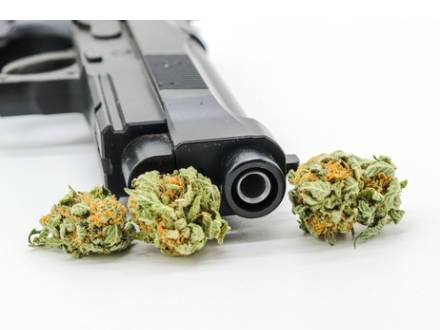 For decades, federal law treated an "unlawful user of or addicted to any controlled substance" the same way it treated violent felons when it came to gun ownership. Using drugs of any kind outside of a medically indicated reason, like a prescription, automatically stripped that person’s Second Amendment rights.
On June 18, 2026, the United States Supreme Court changed that. In United States v. Hemani, the court ruled that the federal government cannot prosecute a person for possessing a firearm based only on the fact that they regularly use marijuana or another controlled substance. If you are a Wisconsin gun owner who uses marijuana, or if you are currently facing federal gun charges connected to drug use, this ruling may be important for you. Talk to our Milwaukee gun rights defense attorneys to learn more.
What Was United States v. Hemani About?
Ali Hemani is a Texas man born in the United States who lived in the Dallas area with his family. In 2022, federal agents searched his home on suspicion of terrorism-related activity involving family members. Hemani cooperated. He handed over a firearm he kept at home and showed agents the marijuana he had. He told investigators that he used marijuana about every other day.
More than six months after the search, the government charged Hemani under 18 U.S.C. § 922(g)(3), a federal law making it a felony for anyone who is an "unlawful user of or addicted to any controlled substance" to possess a firearm. The terrorism investigation that prompted the search produced no charges. The cocaine found on the property produced no charges. The government's single charge against Hemani rested entirely on his admitted marijuana use. A conviction could have carried up to 15 years in federal prison and a lifetime ban on firearm ownership.
Hemani challenged the charge on Second Amendment grounds. The federal district court dismissed the indictment. The Fifth Circuit Court of Appeals upheld that dismissal. The Supreme Court agreed to hear the case and, in an opinion written by Justice Neil Gorsuch, affirmed the lower courts unanimously.
How Did the Court Reach Its Decision in U.S. v. Hemani?
The ruling stems from a constitutional framework the Supreme Court previously established in its 2022 decision, New York State Rifle & Pistol Association v. Bruen. Under Bruen, the government can only limit someone’s Second Amendment rights if the law it uses to do so is consistent with the nation's historical tradition of firearm regulation. That means the government must show that a modern gun ownership restriction law is similar to regulations that existed in early American history.
The government's argument in Hemani relied on historical laws targeting "habitual drunkards." The government argued these laws established a tradition of disarming people who regularly use intoxicants. The court rejected that argument on three grounds.
The Definition of "Habitual Drunkard" Was Much Narrower Than the Government Claimed
Justice Gorsuch pointed out that in early American law, a habitual drunkard was not simply someone who drank frequently or heavily. Given the fact that even George Washington regularly drank three glasses of wine in the evening and ran up notoriously expensive bar tabs, frequent drinking alone did not mean someone was a habitual drunkard.
The Historical Laws Served Different Purposes
The court found that the old habitual drunkard statutes were not primarily aimed at protecting the public from violence. The government's stated purpose for § 922(g)(3), which is preventing violent crime, did not match the purposes those historical laws actually served.
The Law Operates Differently Than Historical Analogues Did
The historical laws the government cited almost always included some form of legal process before a person lost their rights. The government would need a conviction, a probate proceeding, a bond hearing, etc. Under § 922(g)(3) as it previously stood, a person loses their Second Amendment rights automatically the moment they become an unlawful user of any controlled substance.
What Are the Limits of the Hemani Ruling?
Justice Gorsuch was careful to describe the decision as a narrow one. The court did not rule that drug users can never be prohibited from owning firearms under any circumstances. Specifically, the ruling leaves open:
- Whether the government could prosecute someone with individualized proof that their specific drug use makes them dangerous
- Whether laws targeting people who are actually addicted to drugs would survive constitutional review
- Whether Congress could pass a more targeted law after finding that users of a particular drug pose a specific risk
- The existing federal ban on gun ownership for people convicted of felonies, which was not at issue
Instead, what Hemani does is make it so that the government can’t automatically strip a person of Second Amendment rights based on nothing more than the fact that they regularly use marijuana or another controlled substance.
The court also noted that the government's own actions undercut its argument. The Department of Justice has directed federal prosecutors to limit enforcement against marijuana users. Most states have legalized marijuana use to some degree. Moreover, the federal government recently reclassified certain marijuana products from Schedule I to Schedule III, which includes drugs with accepted medical uses and lower abuse potential.
What Does U.S. v. Hemani Mean for Wisconsin Gun Owners and Marijuana Users?
Wisconsin has not legalized recreational marijuana. Marijuana possession remains illegal under both Wisconsin and federal law. Now, however, a Wisconsin resident who uses marijuana and legally owns a firearm cannot be prosecuted under § 922(g)(3) based on marijuana use alone, without the government showing that their drug use makes them individually dangerous.
This does not mean there are no legal risks to using marijuana and possessing a gun. State law and federal law governing firearms are separate. Wisconsin has its own statutes that apply to firearms and controlled substances.
If you are a gun owner in Wisconsin who uses marijuana or another controlled substance, or if you are currently facing federal charges connected to § 922(g)(3), speak with an attorney about whether Hemani applies to your situation.
Contact a Milwaukee Gun Rights Attorney at Gimbel, Reilly, Guerin & Brown, LLP
The Hemani decision is one of the most significant Second Amendment rulings in years. Its full implications are only just beginning to unfold. Whether you are concerned about protecting your existing gun rights or you are facing federal firearms charges connected to drug use, Gimbel, Reilly, Guerin & Brown, LLP is a Wisconsin criminal defense firm with a strong record of standing up for clients' Second Amendment rights.
Call 414-271-1440 to speak with a Wisconsin Second Amendment restoration lawyer about your situation.